
College Days
Harbans Mukhia remembers his time at Kirori Mal College
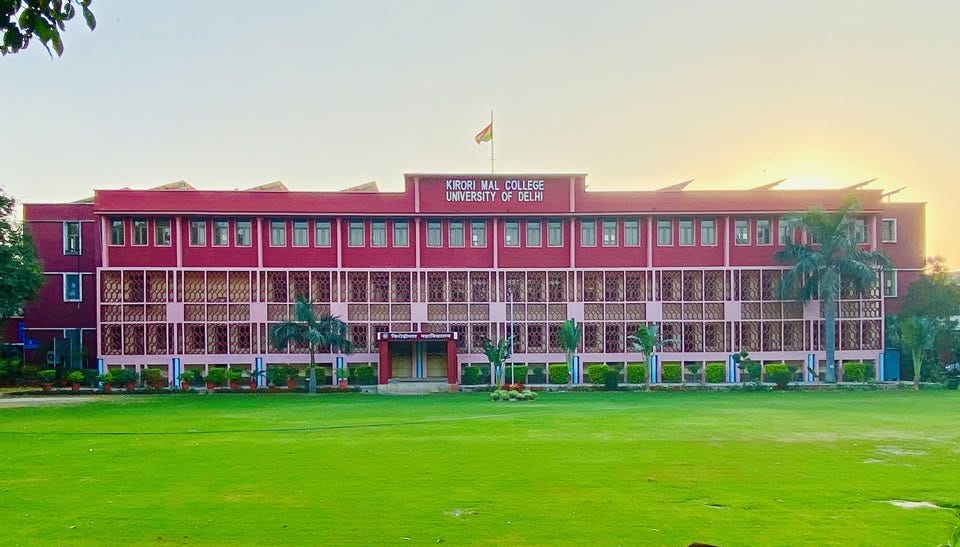
The year, 1956. Kirori Mal College (KMC) had moved from the infamous GB Road (Red Light Area) to Delhi University (DU)’s celebrated North Campus. I had cleared the Intermediate level — between the 10th class called Matric and Undergraduate — from Benares Hindu University (BHU) and came for admission to a college in DU. It was already mid-July and the admission process in most colleges had been completed. Then someone told me I had a chance at KM because it was new and not in high demand with students partly because of its tongue-twister of a name which invited much ridicule! Desperate, I walked straight into the Principal Mr. Hardwari Lal’s office and sought admission to the second year of BA (Hons) in History (to which my Intermediate degree entitled me) as well as residence in the hostel. Without much scrutiny he signed my application for both and asked me to go see Dr. Ashraf in the College Staff Room. It was that easy even though my Intermediate grades were just about average, a few points above 50 per cent.
That casual decision of the Principal was to shape my life, especially by the involvement of Dr. Ashraf in it. Even as the College was graded at the lower rungs in popular estimation, its faculty had some formidable figures: Dr. K. M. Ashraf was both a pathbreaking historian who was the first to research and write a history of the life and conditions of the people in medieval India, especially during the period of the Delhi Sultanate, but was also a highly respected freedom fighter; Frank Thakur Das was a tall, very gentle, suave teacher of Political Science but was to acquire a great reputation for initiating and nurturing theatre on the campus — among his early trainees who went over to films were Amitabh Bachchan and comedian Satish Kaushik; Arun Bose, who headed the Economics Department was a renowned scholar, as was Nand Lal Gupta of Political Science. There were others like D. R. Goyal, once an RSS volunteer, later the author of a book sharply critical of the Sangh. All of them were known to be committed to the Left ideology although to varying degrees. Their eminence gave the College a Leftist reputation, especially during the tenure of its second Principal, the visionary Dr. Sarup Singh who was no committed Leftist himself.
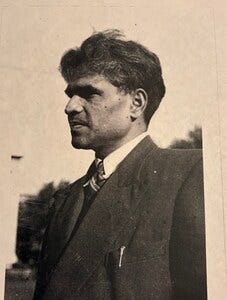
I stayed at KMC and its hostel from 1956 to 1960 for BA and MA, and these were clearly the best years of my life. I had enrolled for History following the popular lore that the discipline gave you the best entry point to the IAS (Indian Administrative Service) but forgot all about it once I started to study it under Dr. Ashraf’s guidance, although I never, ever talked to him about it.
It happened that I got so engrossed in it that in the end it turned me into a sort of historian. Dr. Ashraf trained us into not accepting received knowledge about history, including that received from him as a “given.” Once I attached myself to him on his evening walk and we talked about something in history and as an undergrad lad, I said “No, Sir, I don’t agree with you.” He actually embraced me and said some very kind words, that he was proud of me for differing with him. There were numerous legends afloat about him although he never uttered a word about himself, at least to students. In life one has many teachers but only one Guru; Dr. Ashraf was/is my Guru.
Of the hostel residents everyone was new to everyone else. Therefore, new friendships were being formed. While we had been allotted rooms, we had to get our own bulbs to light them up. As I was passing by one unlit room, I just asked its allottee casually, “Kamre me andhera kar rakha hai?” He answered quickly, “O Pyare Lal, apni to zindagi meiN hii andhera hai!” That was Satya Prakash, and it was the beginning of a friendship that lasted a whole lifetime until his demise a few years ago, having scored many a success including the setting up of the first co-educational school in his township in Punjab. Many such friendships evolved amongst strangers.
The hostel mess was another venue for getting to know one another. The food was routine, but nothing was more routine than custard as the dessert every second night. “There is more custard flowing in my veins than blood” became the popular saying. Among the mess waiters everyone’s favourite was Ganga Singh, a handsome and pleasant young guy from the hills. Waiters received the princely salary of Rs. 25 per month and an annual increment of 50 paise. The students’ average monthly expenditure was Rs. 125 including college fees, hostel room rent, mess, Char Minar cigarettes, and an occasional movie which probably cost 50 paise that we sometimes borrowed from Ganga Singh. Once my classmate and close friend K. Bikram Singh, who later made some offbeat films and wrote the most authentic biography of the star among Indian painters, M. F. Husain, had received his money order from home and had paid off all the debts he owed to the college canteen, friends, and Ganga Singh. He came to the Library and sat beside me on the bench or chair but was fidgety all the time. He then said, “After paying off the debts I have one rupee left in my pocket and it is not letting me rest. Come, let’s finish it off so we can sit back here quietly and study.” That was the manifestation of an aristocratic attitude minus the resources required for it!
On one rare and precious occasion the legendary poet Faiz Ahmad Faiz came to the college to visit his comrade and friend Dr. Ashraf and some of us, Arjun Dev, Zahoor Siddiqi, and I came to know of it. We parked ourselves on the steps at the entrance and saw an aristocratic gentleman, immaculately dressed in what must have been a very expensive suit and necktie emerging from a high-end limousine of the Pakistan embassy and we all shook hands with him; I didn’t wash my hand for three days. We also noticed in his hand a tin of 50 cigarettes of the 555 brand which we imagined was the ultimate in luxury. We learnt that 50 cigarettes was his daily quota. The cost of one such cigarette would have brought us a month’s stock of Char Minar!!!
Friendship between boys and girls was almost unheard of, so no expense on that account. Life was truly uncomplicated!
In 1960 I had earned the Master’s degree and later in the year I was appointed Lecturer in the very post that Dr. Ashraf had vacated on accepting a Visiting Professorship at Humboldt University, Berlin, then in the Communist East Germany, known as the German Democratic Republic, where he passed away in 1962. A most momentous part of this appointment as lecturer was that of the two candidates for the post — the other was Iqtidar Alam Khan, a promising scholar from the venerable Department of History, Aligarh Muslim University, who was to become in time a major voice among historians of medieval India. So, we met as competitors. He was a 6’ 4” tall genuinely Pathan looking young man, son of the celebrated Urdu poet, Ghulam Rabbani Taabaan. I got the job most likely because I was the local boy. But that competition created a deep friendship, extended to our families including the next generation and is still alive and strong although Bhai Khan (as he is universally known) has recently been left alone by his partner after six decades of togetherness.
1962 was the year of India-China armed conflict and the humiliation India had to suffer created a wave of dismay as well as indignation. Perhaps towards the end of the year or early next year, Field Marshal Gen. Cariappa, who had acquired the status of a legend, visited the college and gave a rousing speech in the Auditorium concluding it with the call to students to identify Left-leaning teachers and thrash them. Immediately, Dr. Sarup Singh, who was chairing the function, went up to the mic and much to his credit, declared that no student would touch any faculty member in K M College and that the General’s call would divide the nation when the need was to unite it. It showed the difference between an academician’s larger vision and a soldier’s quick response. The students paid heed to their Principal’s word rather than to the Field-Marshal’s.
In 1963, the post I had temporarily held as Lecturer was advertised and a very highly qualified candidate, Dr. J. S. Grewal, with a freshly minted PhD from London University, had applied for it. I, with a modest MA and with no research experience, didn’t stand a chance. Dr. Grewal accepted the offer and I devoted the whole of the next year of unemployment to research, getting the taste for creating one’s own ideas. I felt grateful to Dr. Grewal for facilitating the development of this taste in me. I could perhaps say that the taste has stayed with me even as the time for sustaining it has nearly run out. Today, when I see in the newspapers that KMC is among the most sought after by students for admission among DU colleges, my nostalgia for it gets more poignant.
For a detailed biographical account of the life and work of Dr. K. M. Ashraf, see this two-part article by Dr. Kamran Asdar (here and here).
Harbans Mukhia, an acclaimed historian of medieval India and the author of a number of books on the Mughals, was Rector at Jawaharlal Nehru University from 1999 to 2002. His essay, “Was There Feudalism in Indian History?” led to an international debate in the Journal of Peasant Studies between 1985 and 1993. His collection of Urdu poems (kuch udaas nazmeiN) was published in 2025.